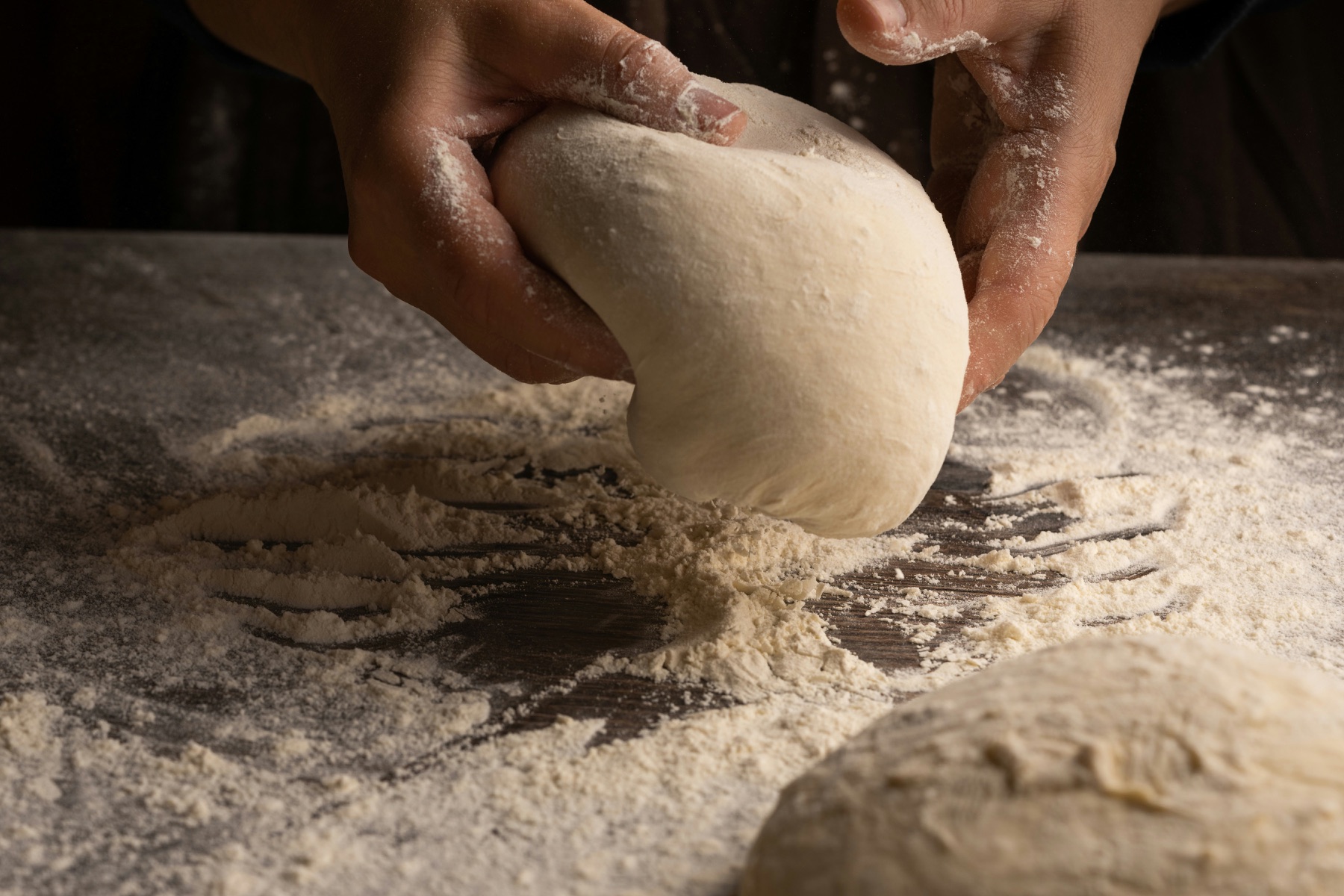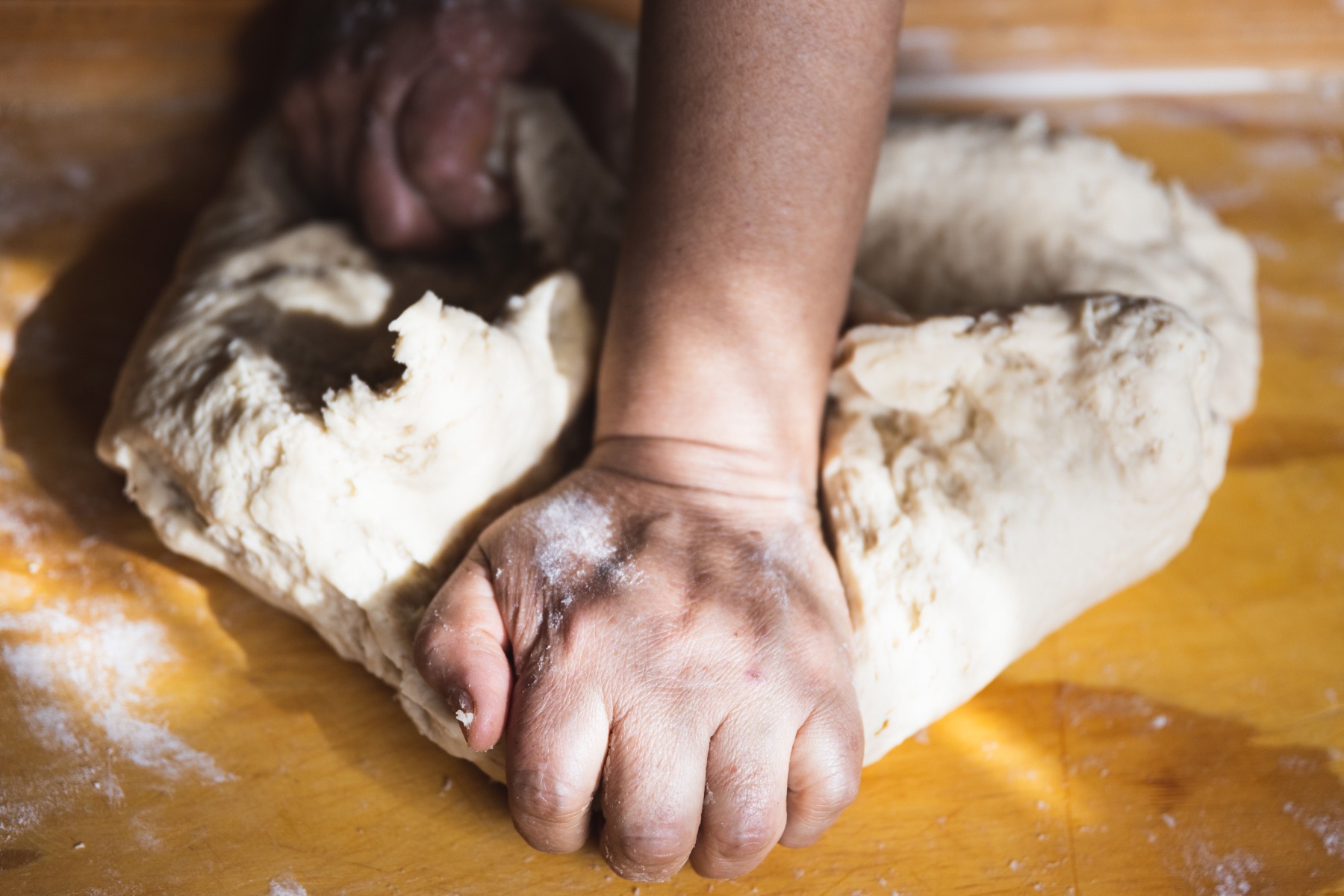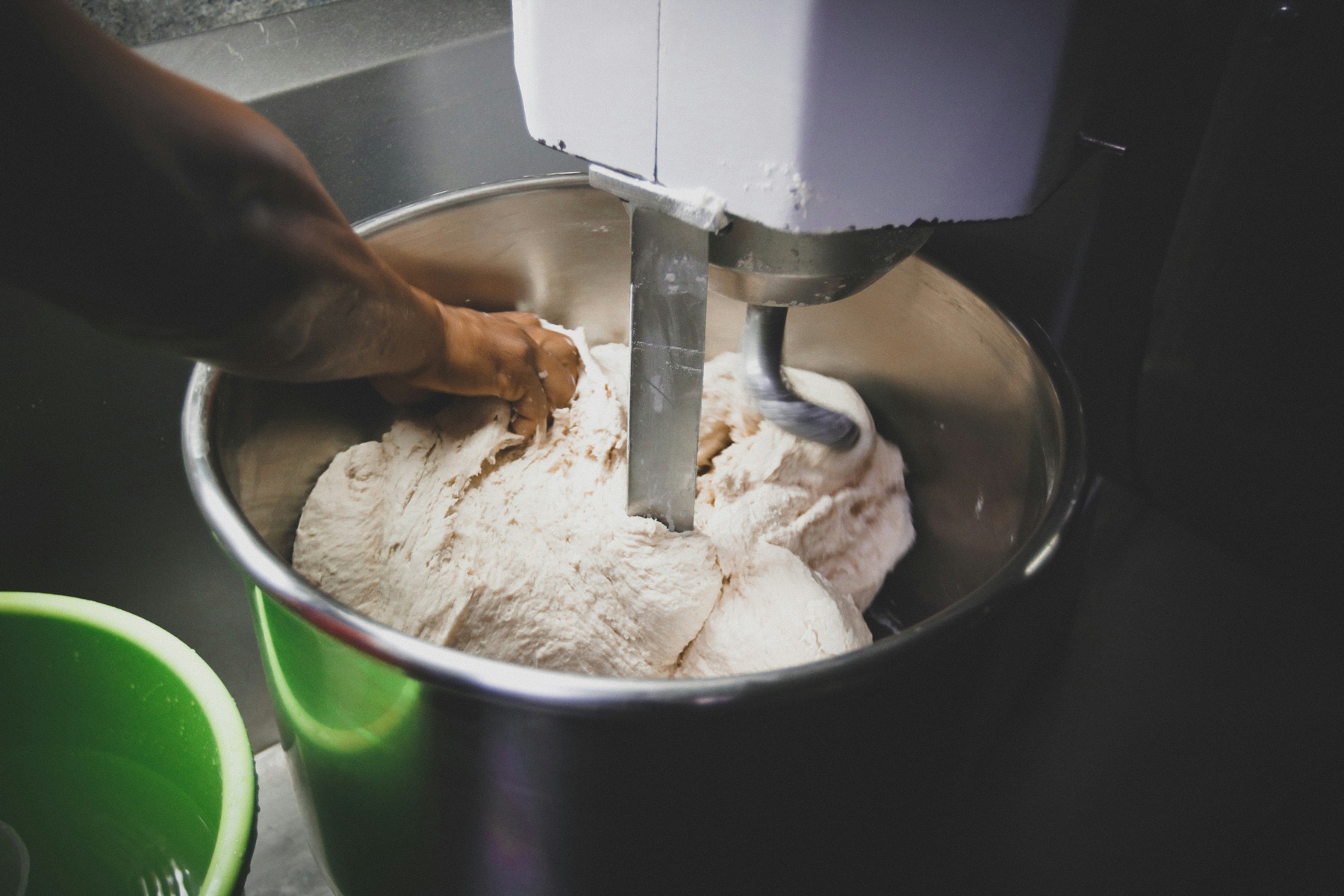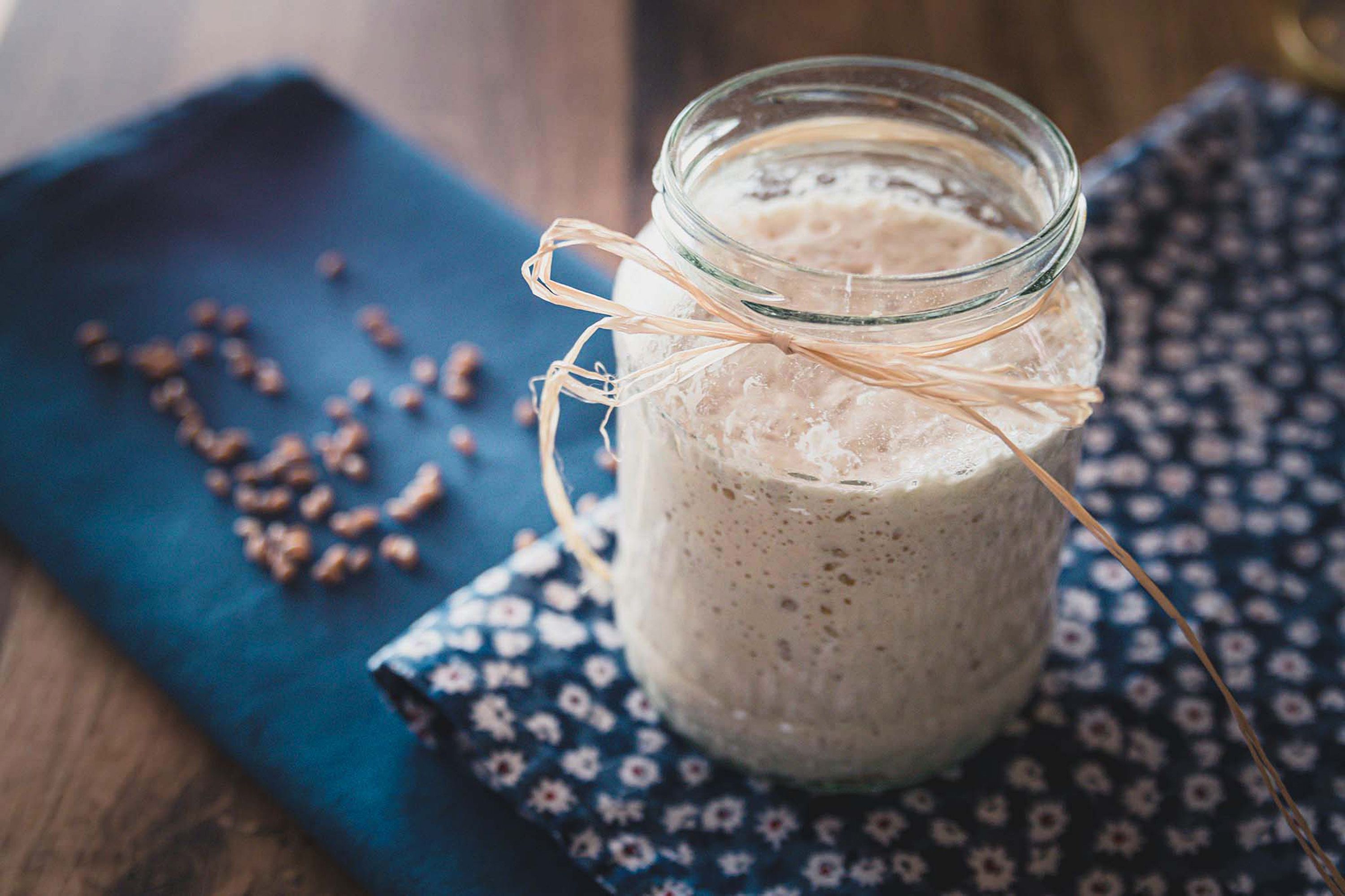
Fermentation does more than make dough rise. Flour enzymes release sugars and amino acids. Yeast and bacteria turn them into acids, alcohols, esters, and other aroma compounds. In the oven, the remaining compounds fuel browning reactions and give bread its toasted, nutty, malty, and savory character.
More time doesn't automatically mean more flavor. Change the temperature, flour, culture, acidity, preferment, malt, added sugar or enzymes, or the way you bake, and you change the result. Leave the dough too long and it can run low on sugar and lose strength. You want the flavor to develop while the dough can still hold its shape and brown well.
Dough Chemistry During Fermentation
Flour enzymes work on starch and protein. Meanwhile, yeast, plus lactic-acid bacteria in sourdough, consume nutrients and release new compounds. What one process produces can feed another.
Sugars Released from Starch
Sugar Is Consumed and Produced. Enzymes release sugar as yeast consumes it. Good fermentation keeps yeast fed without using so much sugar that the crust struggles to brown.
Flour contains a little available sugar, but most of its carbohydrate is locked in starch. Yeast can't consume intact starch granules. Flour's amylase enzymes act on accessible starch, especially granules damaged during milling, and release smaller carbohydrates such as maltose. Other enzymes free glucose and fructose from compounds already in the flour.
Enzymes release sugar as yeast consumes it, so the supply keeps changing. Sugars from fructans and sucrose matter most early, while amylase-generated sugars matter more later.1 Longer fermentation doesn't simply add sugar. It changes the source and gives yeast more time to consume it.
Yeast turns some of this sugar into carbon dioxide, ethanol, and other fermentation compounds. Sugar left when the dough reaches the oven can brown the crust. Good timing keeps yeast fed without letting it consume so much that the crust struggles to brown.
Amino Acids Released from Protein
Proteolysis Weakens Dough While Altering Flavor. Proteolysis can supply flavor precursors, but the sensory effect depends on the conditions. Too much protein breakdown weakens the dough.
Flour proteins are long amino-acid chains. Protease enzymes cut them into shorter peptides, and further enzyme activity can release free amino acids. This process is called proteolysis.
Flour has its own proteolytic enzymes. In sourdough, acid and enzymes from lactic-acid bacteria can carry the process further. Selected bacteria produce more free amino acids than acid alone, so both acidity and microbial activity play a part.2
Protein breakdown changes structure too. It can make dough stretchier, but too much weakens the gluten network. Released amino acids may feed microbes; any left for baking can also take part in Maillard and Strecker reactions. Commercial peptidase roughly doubled one dough's free amino acids. Bread made with it had stronger cheesy and alcoholic aromas in the crumb and stronger caramel, toasted, and nutty aromas in the crust.3 The aromas were stronger, not unique to proteolysis, and the concentrated enzyme treatment doesn't prove that longer fermentation gives the same result. The outcome still depends on which amino acids are released, what microbes consume or change, the available sugar, and the bake.
Aromas Created by Microorganisms
Microorganisms Create Aroma Alongside Gas. As yeast raises dough, it also produces alcohols, esters, aldehydes, and acids. Sourdough bacteria add their own acids and metabolites, so the culture and fermentation conditions shape the aroma.
Carbon dioxide makes yeast's work easy to see because it expands the dough, but gas is only one result. Yeast also makes ethanol and smaller amounts of alcohols, esters, aldehydes, organic acids, and other volatile compounds. Some scent the fermented dough, some evaporate in the oven, and others help form the finished bread's aroma.
The mix depends on the yeast strain, flour, temperature, acidity, nutrients, and fermentation time. One yeast strain made more bread-aroma compounds in a balance tasters preferred. With that strain, warmth brought some alcohol- and fruit-like aromas forward sooner, while cooler fermentation took longer and favored a different balance.4 Those results came from preferments under test conditions, not proofing schedules to copy at home. They still explain why two doughs can reach the same volume and smell different.
Sourdough brings lactic-acid bacteria into the mix. They make lactic acid, acetic acid, and other metabolites, and they change which nutrients remain for the yeast. That does more than raise acidity: it creates a different balance of acids, alcohols, esters, aldehydes, and other aroma compounds.
Flavor Development During Baking
Baking Creates New Aromas. Fermentation supplies aroma compounds and changes the flavor precursors in the dough. The oven removes some, preserves others, and transforms the rest. Most visible browning happens in the crust.
Fermentation changes what's in the dough, but the oven starts new reactions. The wet crumb stays relatively cool while the drying surface gets hot enough to brown quickly. That's why the crust and crumb of the same loaf smell and taste different.
Once bread's surface is hot and dry, reducing sugars react with amino compounds through the branching network called the Maillard reaction. These reactions make brown pigments and many of the crust's toasted, nutty, and savory aromas. One branch, Strecker degradation, turns individual amino acids into especially aromatic compounds.
Proteolysis matters here because it frees smaller peptides and amino acids for those reactions. In the peptidase example above, extra protein breakdown increased Maillard-derived aroma compounds and strengthened the crust's caramel, toasted, and nutty notes. Free amino acids also fall sharply in the crust during baking, a sign they are being used as the crust forms.5
More protein breakdown doesn't guarantee more flavor. Yeast and bacteria may consume or change those amino acids before baking, and the specific ones left affect which aromas can form. Too much proteolysis can weaken the dough before any flavor benefit pays off.
Caramelization is different: heat breaks down sugar without amino compounds. It and Maillard reactions both brown crust, but they produce different aromas. Adding sugar may make a crust sweeter and darker, but it can't replace the amino compounds Maillard browning needs. A pale or mild crust could come from the balance of sugars and amino compounds, the dough's acidity, or a surface that never got hot and dry enough. Too little sugar is only one possible cause.
Fermentation aromas keep changing in the oven. Some volatile compounds leave with the steam, some stay in the crumb, and some react to form new compounds. Dough can smell strongly alcoholic before baking without tasting alcoholic afterward because much of the ethanol evaporates.
A pale loaf isn't always underbaked. Fermentation may have used much of the available sugar, the formula may contain few reducing sugars, or the surface may never have gotten hot and dry enough to brown well. Baking longer, changing the bake profile, and changing the formula do different things, so find the cause first.
Fermentation Time and Temperature
Time and Temperature Change Flavor Development. Time and temperature change how quickly each reaction runs. A colder or longer fermentation takes a different biochemical path; it doesn't automatically make a more flavorful loaf.
A longer fermentation gives enzymes and microorganisms more time, but flavor compounds don't build at a steady rate. Sugars are released and consumed. Amino acids are released, consumed, and changed into other compounds. Some volatile compounds form while others fade. At any point, the flavor comes from the balance of all these processes.
Temperature changes that balance. Within the normal fermentation range, warmer dough generally speeds yeast, bacteria, and flour enzymes. Cooler dough slows them, but not necessarily by the same amount. A cool fermentation can therefore produce a different mix of compounds, not just a delayed version of a warm one.
The same rise doesn't mean the same flavor. Warm and cool doughs can reach a similar height yet develop different crust aromas.6 To test this at home, keep the formula and bake the same, adjust the yeast or starter so both doughs reach the same rise, then compare the crust and crumb. Use the schedule that gives you the aroma you prefer without weakening the dough.
Preferments
A Preferment Matures Only Part of the Flour. A preferment brings the products of a longer fermentation into fresh dough, but only its share of the flour has that biochemical history.
Preferments bring flour and water that have already fermented. What they add depends on their hydration, maturity, and share of the final flour.
A poolish, biga, or pâte fermentée lets part of the flour ferment before you mix the final dough. During that time, yeast makes aroma compounds while flour enzymes keep working on starch and protein. Once you add the preferment, its soluble sugars, acids, amino acids, alcohols, and other metabolites spread through the new dough.
The rest of the flour doesn't share that history. Dough with 20% prefermented flour mixes extensively fermented flour with fresh flour; it isn't chemically the same as dough whose entire flour supply fermented for those hours. The preferment still changes the whole dough by adding concentrated fermented material. It doesn't age every starch granule and protein chain equally.
Each preferment behaves differently. A ripe poolish often adds a gently sweet, nutty aroma and makes dough stretchier. A typical stiff biga ferments more slowly, leans wheaty and nutty, and adds more strength. Salted pâte fermentée usually brings the rounded, lightly tangy flavor of mature bread dough.
These are tendencies, not guarantees. Flour, hydration, yeast level, salt, temperature, ripeness, and the amount you use can blur the differences or push the flavor another way.
Malt, Sugars, and Enzymes
Shortcuts Accelerate One Pathway. Malt, sugar, and added enzymes can push specific flavor pathways, but none recreates fermentation as a whole. Too much enzyme activity can damage the dough or crumb.
Malt affects flavor in two ways. Diastatic malt contains active, starch-degrading enzymes that make fermentable and reducing sugars available faster. Non-diastatic malt has been heated enough to deactivate those enzymes, so it adds malt solids, color, sweetness, and flavor without the same enzymatic effect.
Added sugar gives the dough an ingredient it can use right away; it doesn't recreate a long fermentation. Yeast may consume some, while the rest changes sweetness and browning. At higher levels, sugar also changes hydration and yeast activity, so adding it changes the formula. It isn't a neutral shortcut to a darker crust.
Commercial amylases, proteases, and peptidases speed specific reactions. That control helps commercial bakers, but it has tradeoffs. Too much amylase can leave too little intact starch to set a normal crumb, while too much broad protease weakens gluten. Many bread flours already contain malted barley flour or added enzymes, so another dose may solve a problem the flour doesn't have.
If you use malt or an enzyme, follow the dosage for that flour or product and change one variable at a time. More activity doesn't recreate the full network of a longer fermentation. It only speeds one part.
Sourdough
Sourdough Cultures Shape Acidity and Aroma. Sourdough flavor comes from its specific community of yeast and bacteria and the conditions they ferment in, not from acidity alone.
Sourdough brings yeast and lactic-acid bacteria together. The yeast makes carbon dioxide and a range of volatile compounds. The bacteria make lactic acid, acetic acid, and other metabolites, while the rising acidity changes flour-enzyme activity and the nutrients available to the whole community.
Sourness is only part of the picture. Across twelve wholemeal sourdough cultures, some leaned toward yeast-driven aromas and lactic acid, giving the bread a more alcoholic, buttery, and softly tangy character. Others made more acetic acid and fruity esters, suggesting a sharper, vinegar-like tang and a different aroma.7 Sourdough names a fermentation system, not one fixed flavor.
Your schedule changes what you taste. A short, warm bulk usually reaches its target rise before much acid builds, so expect cleaner wheat and yeast flavors. If sourness does develop, warmth tends to favor the rounder, yogurt-like character of lactic acid. A longer, cooler fermentation gives enzymes and microbes more time, which can build broader fermented aromas, fruitier notes, and a sharper acetic edge. The refrigerator slows all this dramatically, so results depend on the dough's starting temperature, how quickly it cools, and which microbes are present.
A same-day dough made with malt and baked dark can have a bold crust without tasting deeply fermented. Diastatic malt releases more sugar for fermentation and browning; non-diastatic malt adds malty flavor and color directly. Expect a darker, maltier, more toasted crust over a fairly clean crumb. An overnight cold fermentation can spread a broader mix of alcohol, ester, and acid aromas through the crumb, yet still brown poorly if yeast uses too much of the available sugar.
Starter consistency nudges the flavor too. A stiff starter, especially one kept cool through repeated feedings, often favors more acetic acid and a sharper, vinegar-like tang. A 100%-hydration starter generally favors more lactic acid and yeast-derived aromas, giving a rounder, yogurt-like tang with fruitier notes. Switching mature starters between firm and liquid maintenance changed both the microbial community and its acids and aromas over time.8
Again, these are tendencies. Flour, feeding ratio, maturity, temperature, and the amount of starter in the final dough all matter. One feeding at a different hydration may not change the flavor enough to notice. For a useful comparison, maintain each starter the same way through several feedings, keep the final dough and bake unchanged, and compare the breads at the same rise.
The Limits of Longer Fermentation
Longer Fermentation Has a Limit. More fermentation helps only while the dough keeps enough sugar and strength for the intended bake. Past that point, extra time can reduce both volume and browning.
Longer fermentation can deepen or change flavor, but not in a straight line. Yeast keeps consuming sugar. Some doughs keep building acid. Volatile compounds appear, change, or disappear. Meanwhile, gas stretches the gluten network while enzymes and acidity alter it.
Eventually, the costs show. Dough may turn slack or sticky, hold less gas, and bake with less volume. Severely over-fermented dough may also brown poorly because yeast has used much of the available sugar. More time is no longer maturing the same loaf; it is making a structurally and chemically different dough.
Cold storage slows these changes but doesn't stop them. You can't compare a three-day pizza dough, an overnight loaf, and a warm same-day dough by time alone. Flour, the amount of yeast or starter, dough temperature, refrigerator temperature, and the final bake all determine where the useful range ends.
Watch the dough's rise, elasticity, aroma, and ability to hold shape along with the clock. Maintaining Dough Strength Through Fermentation explains the structural side of this balance in detail.
Flavor Across the Whole Process
Fermentation Is Only One Contributor. Your bread's final flavor comes from the flour, formula, fermentation, shape, bake, and cooling. Fermentation time alone doesn't tell the whole story.
Ingredients shape what fermentation can do. Whole-grain and higher-extraction flours bring more grain flavor and a different mix of enzymes, minerals, lipids, and nutrients. Salt changes taste directly and affects fermentation. Fat, milk, eggs, and added sugars bring their own flavors and change browning.
The bake decides which differences stand out. A thin pizza crust, a lean hearth loaf, and an enriched sandwich bread expose different amounts of surface to heat and stay in the oven for different lengths of time. The same dough won't show the same roasted aromas when baked pale as it does with a dark crust.
Cooling changes how you judge the bread too. Cut it hot, and steam and volatile compounds escape while the crumb is still setting. Let it cool as the formula requires, then compare crust aroma, crumb aroma, acidity, sweetness, bitterness, and aftertaste. Those specifics tell you more than calling one loaf “more flavorful.”
When you test a change, keep the flour, fermentation endpoint, shape, and bake the same wherever possible. Then you can tell whether temperature, time, culture, or an added ingredient changed the flavor you care about.
Key Takeaways
Enzymes release sugars and amino acids; microorganisms use and change them.
Yeast and sourdough bacteria create aromas as well as the gas that raises dough.
In the oven, some fermentation compounds stay, some escape, and some become new crust aromas through Maillard and related reactions.
Time, temperature, culture, flour, and acidity shift the balance of reactions; there is no universal flavor scale.
Preferments, malt, sugar, and added enzymes affect parts of the system but don't duplicate a long whole-dough fermentation.
Longer fermentation improves flavor only while the dough keeps enough structure and sugar for the intended bake.
Sources
- Sugar availability during wheat-dough fermentation ↩
- Proteolysis by sourdough lactic-acid bacteria ↩
- Peptidase effects on wheat-bread aroma ↩
- Yeast strain, time, and temperature effects on bread aroma ↩
- Free amino acids during bread fermentation and baking ↩
- Fermentation temperature and whole-wheat bread aroma ↩
- Aroma and acid profiles across twelve wholemeal sourdough cultures ↩
- Firm and liquid starter maintenance effects on sourdough microbes and aroma ↩