Hand kneading is easier when the motion matches the dough. Before you mix, check the recipe's hydration, the flour it uses, and whether you want to work on the counter or in a bowl. That gives you a plan before the dough becomes sticky.
This guide uses three lean doughs to show the main approaches: 65% white-flour dough, 75% white-flour dough, and 75% dough made with equal parts white and whole-wheat flour. The firmer dough suits fold-push-turn kneading on the counter. The wetter white dough can be slapped and folded on the counter or mixed in a bowl. The whole-wheat dough starts with a rest so the flour can absorb more water before kneading.
Hydration is the weight of the water compared with the weight of the flour. It helps predict how dough will handle, but it is only a starting point; flour and temperature also change the feel. King Arthur's hydration guide explains the calculation in more detail.
The time ranges below are checkpoints for a small home batch. Your flour, pace, and dough temperature can make the work shorter or longer. Let smoothness, elasticity, and stretch tell you when to stop.
Firm Dough: Fold, Push, and Turn
Mix the dough. Combine the ingredients until no dry flour remains. Move the rough dough to a clean counter. If it feels tacky, resist adding flour; it should become less sticky as it develops.
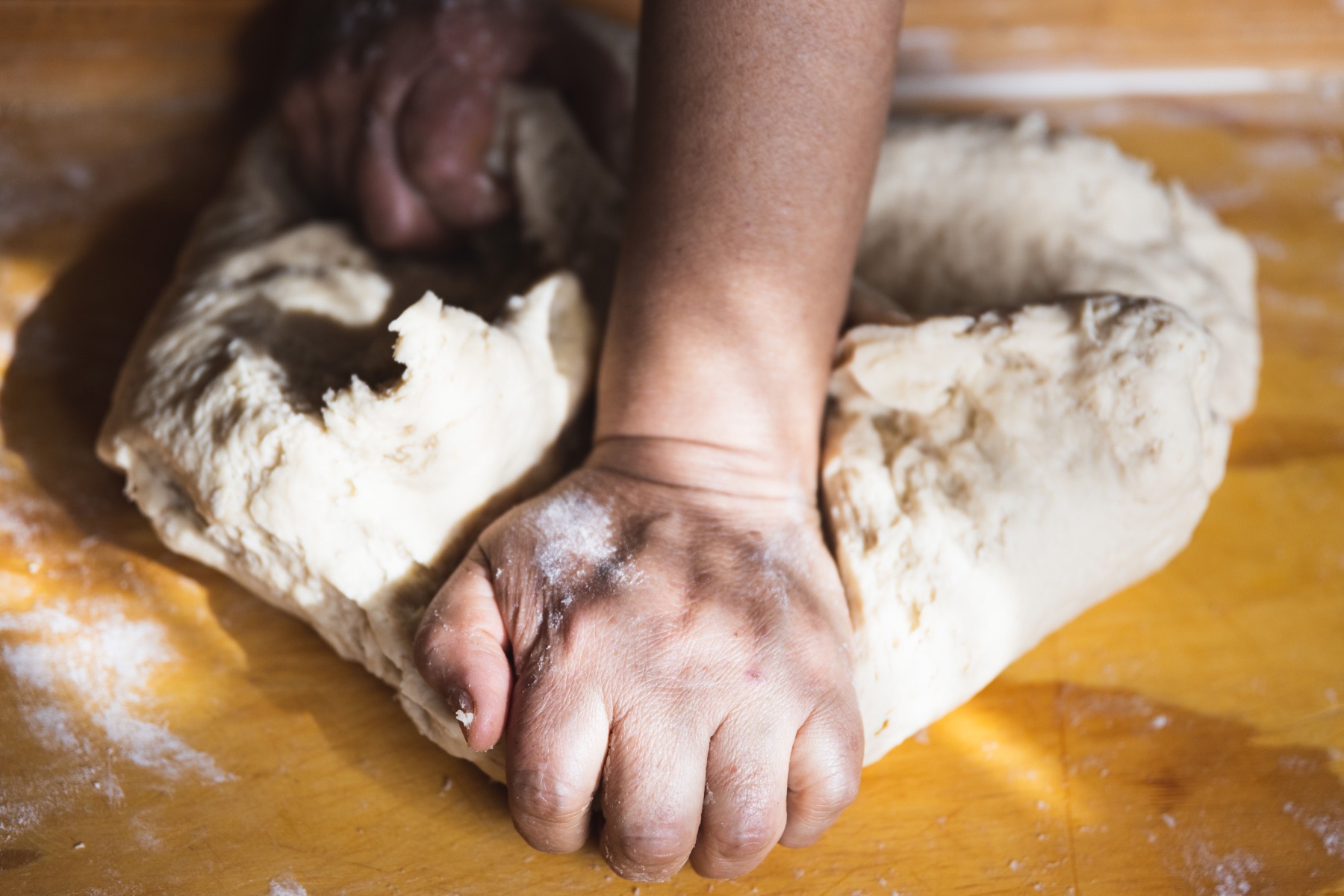
Fold and push. Fold the far edge toward you with one hand. Use the heel of your other hand to push the folded dough down and away. The push should stretch the dough, not flatten it against the counter.
Turn and repeat. Turn the dough a quarter turn, fold it, and push again. Keep a steady rhythm so every part of the dough is stretched. Use a bench scraper to gather any pieces that stick to the counter.
Check the dough. Begin checking after about 5 minutes. A 65% white dough often takes 5 to 7 minutes at a steady pace. Stop when the surface is smooth, the dough feels elastic, and a gentle stretch no longer produces a rough tear.
Wet Dough: Choose a Method
A 75% white dough may spread and stick too much for fold-push-turn kneading. You can work it on the counter with slap and folds or keep it in a bowl and use Rubaud mixing. Both methods develop the same kind of strength.
Option 1: Slap and Fold
Start on a clean counter. Leave the counter unfloured so you do not change the recipe. Use a bench scraper to gather the dough if it spreads.
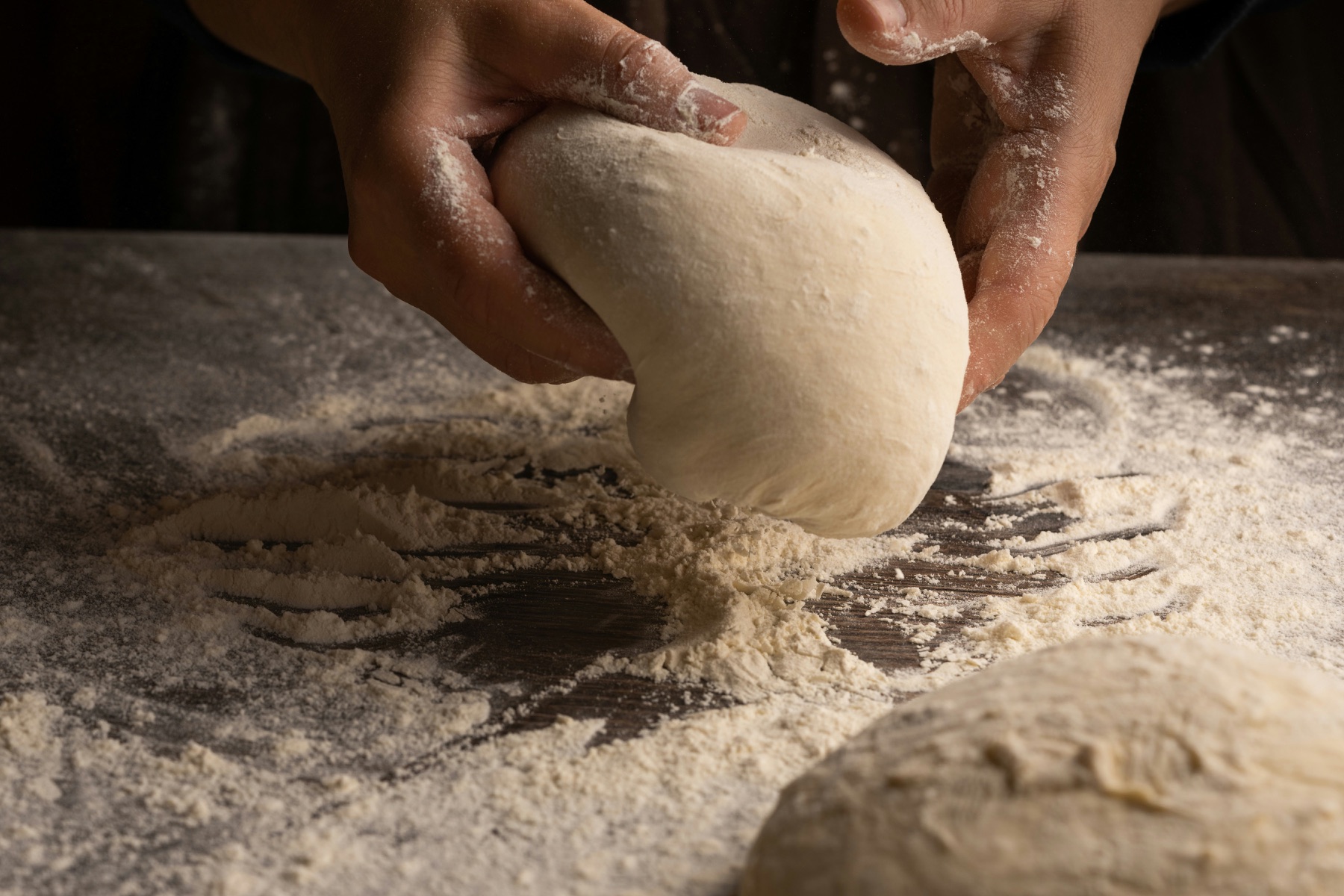
Stretch and fold. Pick the dough up by one side and let its weight stretch it. Set the lower end against the counter, fold the dough over itself, then pick it up from another side and repeat.
Work quickly and lightly. Alternate sides as you go. If sticking becomes difficult, clean and lightly wet your hands, but do not drip extra water into the dough.
Check the dough. Begin checking after about 10 minutes. A wet dough often takes 10 to 15 minutes of active work. Stop when it gathers into a smoother mass, feels elastic, and stretches thinly without tearing right away.
Option 2: Rubaud Method
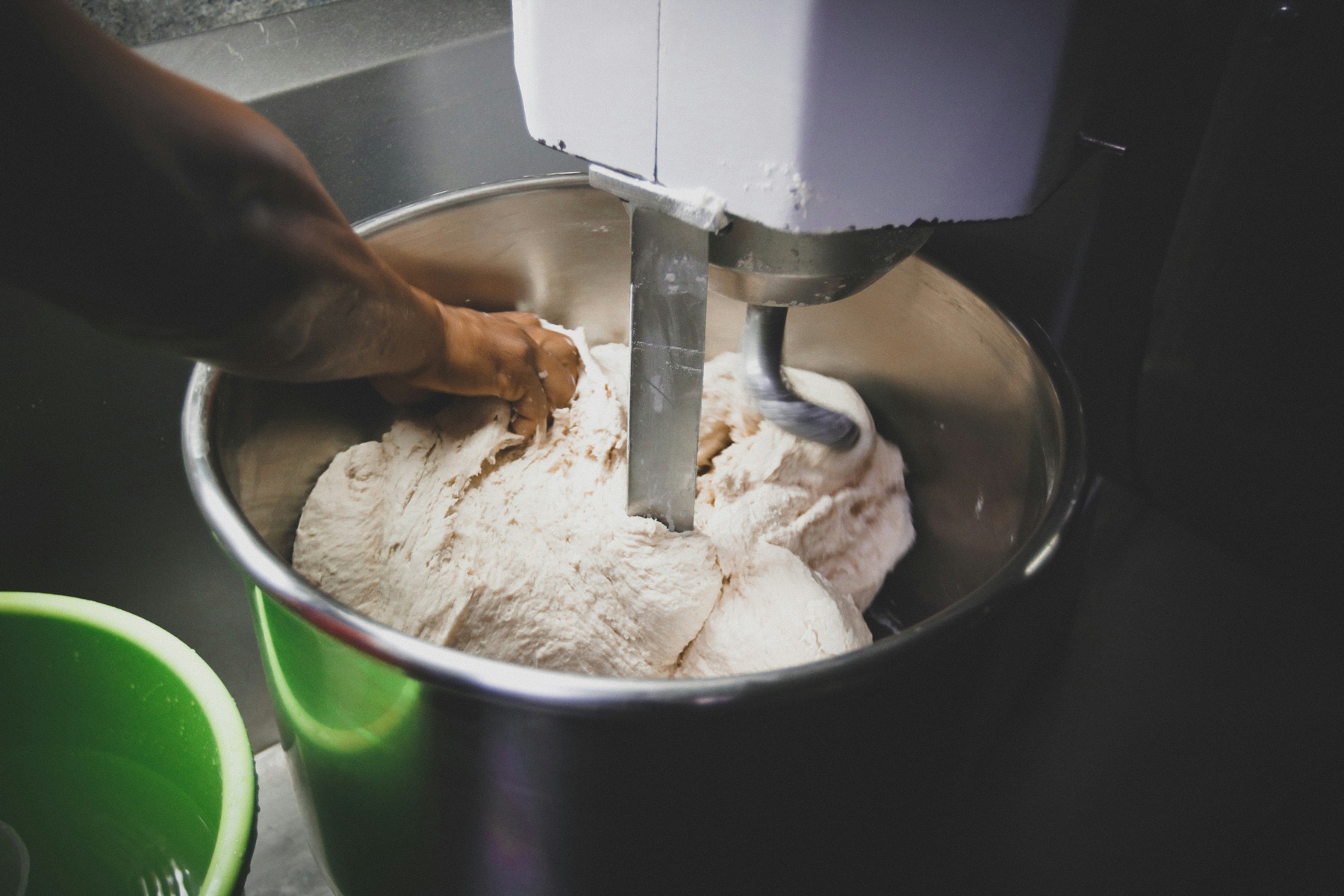
Keep the dough in the bowl. Choose this method when you would rather not work wet dough on the counter. Lightly wet one hand so the dough is easier to handle.
Scoop, stretch, and drop. Slide your fingers under one side of the dough, scoop it upward, stretch it, and let it fall back into the bowl.
Turn the bowl and repeat. Repeat in a quick, circular motion while your other hand turns the bowl. If the dough begins to resist or tear, cover it for 5 to 10 minutes, then continue; resting time does not count as active mixing.
Check the dough. Begin checking after about 5 minutes. Rubaud mixing often takes 8 to 12 minutes of active work. Stop when the dough gathers into a connected mass, pulls away from the bowl more cleanly, and stretches farther before tearing.
Whole-Wheat Considerations
Whole-wheat flour absorbs water more slowly than white flour. Mix the flour and water first, then cover the dough and let it rest for about 20 to 30 minutes. This gives the flour time to hydrate before the remaining ingredients and active kneading. This flour-and-water rest is called an autolyse.
After the rest, add the remaining ingredients as directed by the recipe and knead the dough with either wet-dough method. Begin checking after about 5 minutes; it may need 8 to 10 minutes of active work. Stop when it is smooth, elastic, and able to stretch thinly without tearing right away. The whole-wheat dough may feel firmer than the white dough at the same hydration because whole-wheat flour holds more water. King Arthur's autolyse guide explains when the rest is useful and when it may be unnecessary.
Compare the Finished Doughs
Check each dough by pinching off a small piece and stretching it gently. Developed dough should form a thin sheet before it tears. This is the windowpane test.
The 65% dough should feel smooth, strong, and easy to hold. The 75% white dough should feel softer and stretch farther. The half-whole-wheat dough can reach similar strength but may feel less wet than the white dough at the same hydration. Bran can also make its windowpane look less even. The goal is not to make all three doughs feel identical; it is to develop enough strength for each formula. King Arthur's windowpane guide shows how to perform the test without forcing the dough.
What to Remember
Use fold-push-turn kneading for firm dough that holds its shape on the counter.
Use slap-and-fold on the counter or Rubaud mixing in a bowl for wet dough.
Use a bench scraper and lightly wet hands instead of adding flour to sticky dough.
Consider an autolyse when whole-wheat flour or higher hydration makes the dough slow to hydrate.
Stop when the dough is smooth, elastic, and able to stretch without tearing immediately. Time is only a checkpoint.